
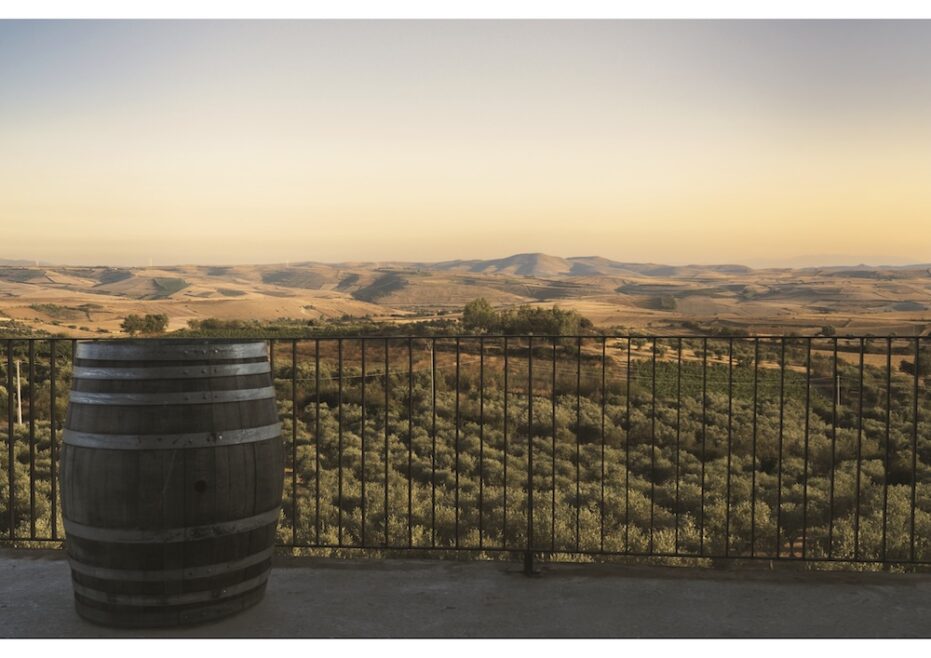
Tenuta Olianas – Famiglia Casadei, Part One
The story of Famiglia Casadei began in 1968, at Castello del Trebbio, in the hills of Chianti Rufina in Tuscany. That was when the Baj Macario family, the parents of Anna Casadei, bought this historic property. It has a magnificent castle dating from 1184, and 350 hectares of land. The family produced wine and olive oil and raised horses. In the early 1990’s, Anna and her husband Stefano Casadei began a restoration. One of their first major investments was vineyard zoning and a detailed terroir study. Today, Famiglia Casadei has grown to become an intergenerational family project across four contrasting wineries; three are across Tuscany and one is in Sardinia. These are Castello del Trebbio, (Chianti Rufina), Tenuta Casadei (Maremma), Terre di Romena (Casentino), and Tenuta Olianas in Sardinia.
All four wineries are run by Anna and Stefano together with their children Lorenzo (finance), Laura (hospitality), and Elena (winemaking). Each place has its own identity but BioIntegrale unites them . This philosophy embeds Biodynamic and Organic farming practices into a wider manifesto that includes using amphorae in winemaking. The wines are made at each estate using local facilities.1
Article structure
Given their size and the contrasts between the four wineries, three of them have been chosen to feature here. Furthermore, each of those three have been separated for clarity and readability, so there are three parts to the story, with each part featuring two representative wines.
Hence, This Part 1 is about Tenuta Olianas in Sardinia. Part 2 will cover Tenuta Casadei in Maremma, while Part 3 will then conclude with the Casadei family headquarters at Castello del Trebbio in Chianti Rufina, which brings us back full circle. Each part includes two representative wines. The UK Importer is Ellis Wines in London, which is B Corp certified.
The fourth winery, Terre di Romana at Casentino, will hopefully appear in a future article. It’s the family’s most recent acquisition and the 7 ha of vines currently makes only 20,000 bottles of Pinot Noir and Chardonnay, which are not yet available in the UK.
Tenuta Olianas in Sardinia
Tenuta Olianas was established in 2000 through a collaboration between Stefano Casadei and the local Olianas family, planting vines on land previously used for sheep rather than vines. It spans over 35 hectares in the Sarcidano region, inland in the heart of Sardinia. Traction comes from using Comtois Horses rather than machines, and there are fruit trees and olive trees here too. It is the only Demeter-certified Biodynamic company on the entire island and is also classified as a Biodiversity Friend.
The mountains here create rain-shadows, while constant breezes ensure ventilation and temperature balance. Vineyards sit high, at between 400-500 meters above sea level, an altitude that enhances sapidity, mitigates climate change and also brings ageing potential. The soils here are diverse: calcareous, volcanic, and sandy; this complexity translates into the wines’ character. Tenuta Olianas produces around 180,000 bottles from local native varieties such as Cannonau, Bovale, Carignano and Vermentino. Some wines are interpreted through amphorae, by Elena Casadei, but there’s also stainless steel and selective use of wood. All the wines are designed to age and evolve.
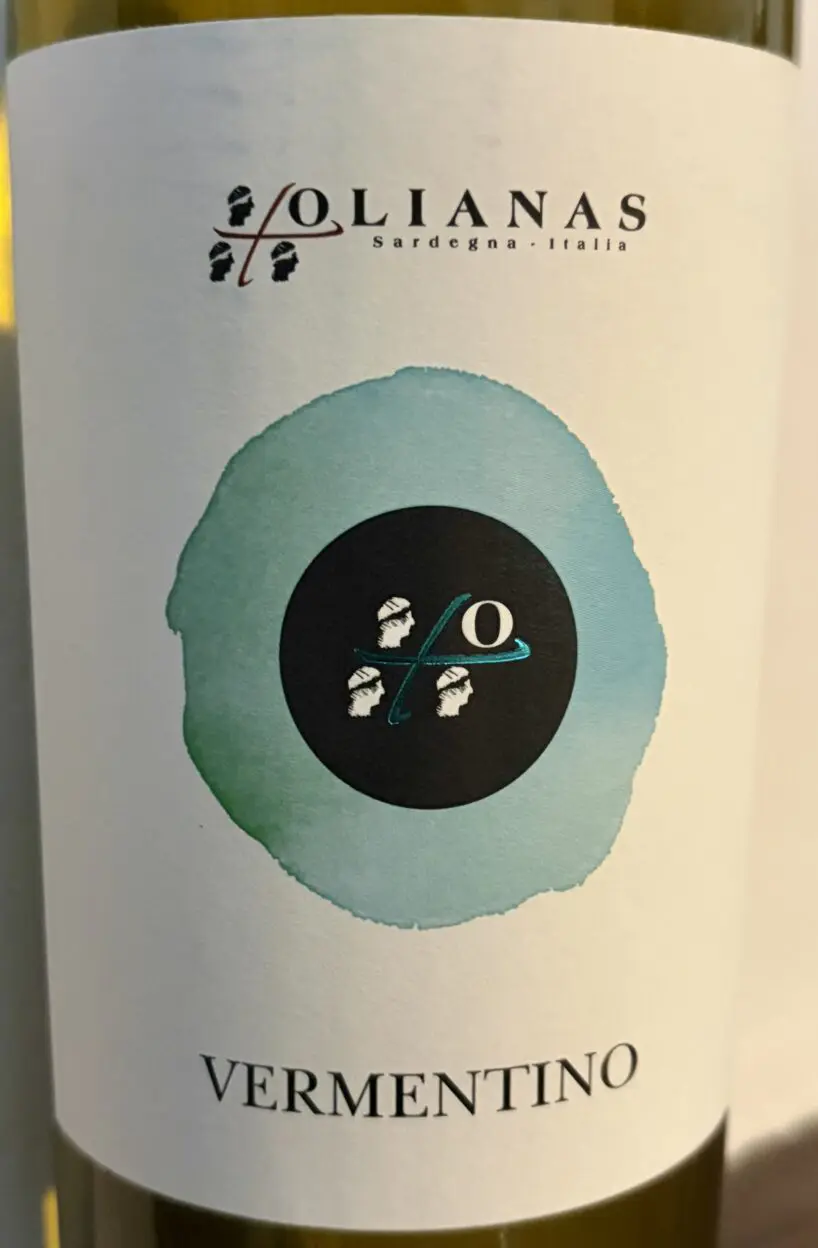
Tenuta Olianas Vermentino
Vermentino di Sardegna DOC, 2025. 13%
Technical
The Vermentino harvest is during the first ten days of September, by hand in the vineyards at Caosu and Porruddu, some 9 ha, planted in 2007. Caosu is characterised by granitic-calcareous soils, bringing the wine minerality and freshness. Porruddu is characterised by loamy-sandy soils and gives apple and lime aromas.
The earliest picked 20% of the grapes ferment on their skins in stainless steel. They then acts as a Pied de Cuve, building a viable population of indigenous yeasts. This then induces a spontaneous fermentation in juice from the later 80%, which have been meantime been destemmed and soft-pressed. This is similar to how a sourdough mother is used in baking. Ageing is then for 5 months, (presumably on the lees) with 70% in steel and 30% in oak tonneaux. Blended and then sealed with a Nomacorc SelectGreen 100 Closure, at bottling on 19 May 2026. There label features the Sardinian flag. Demeter Certified
Tasting
Served chilled. Pale gold. Vermentino is not especially aromatic, but there is plenty of zesty pink grapefruit, apple and citrus flavours and a subtle hint of figs. Combines a rapier acidity yet a rounded body, presumably from the ageing split in different vessels. No wood flavour influence, instead it imparts more of a textural sensation. Excellent length with a lick of salinity at the end, finishing bone dry. Drinking perfectly now and will keep and possibly develop further over say 4-5 years. A quintessentially Sardinian white wine made with its signature white variety. The very careful winemaking create more subtlety and textural complexity, so justifying an easy recommendation.
Food match
Swordfish steak grilled with Wild Garlic and Hazelnut Pesto.
UK Stockist
Fine Wines Direct UK, £22.95
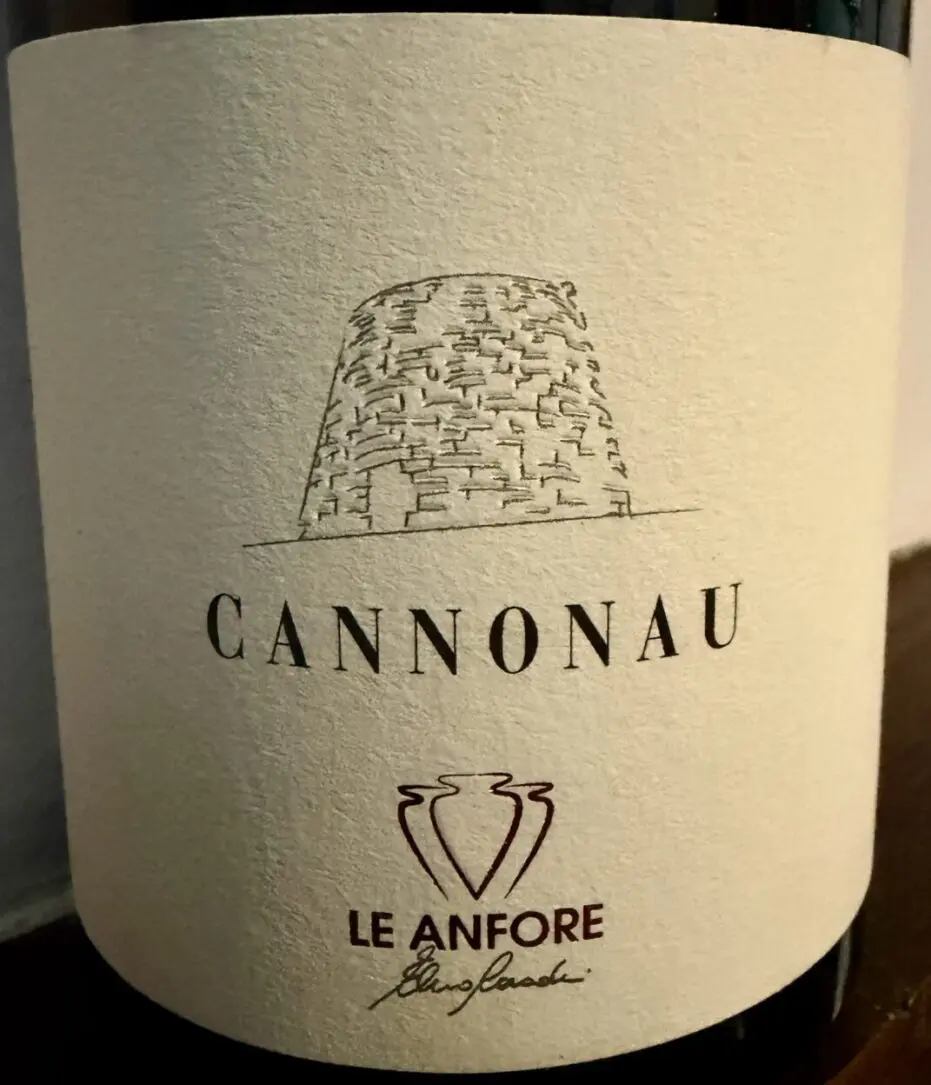
Tenuta Olianas Cannonau Le Anfore di Elena Casadei
Cannonau, Le Anfore di Elena Casadei, 2024. 14%
Technical
This Cannonau (aka Grenache/Garnacha) comes from 1.2 ha of vineyards at Sedda Sa Figu and Anfiteatro. The former is characterised by sandy soils that give the wine elegance and freshness. The latter characterised by clayey soils and by a windy and sunnier micro-climate that gives complexity and structure. There is a rigorous selection of the grape bunches for this wine, first in the vineyard, and again at the winery on a sorting table.
The winemaking here uses Elena’s Amphorae process. Fermentation is in buried Georgian Qvevri for six months on the skins. That’s then followed by a five-month maturation in Tuscan terracotta amphorae from Impruneta. Those vessels have less oxygen porosity, so particularly suitable for Cannonau, which is sensitive to oxidation. In so doing, the tannins are softened by controlled oxygen exposure, while preserving complexity.
Bottle Number 4907 of 6700, closure is natural cork. The label features a Nuragic neolithic building, a landmark in the Sardinian landscape. Demeter certified.
Tasting
Decanted for an hour prior to serving – recommended at this stage as this is still a young wine. Garnet hued. Initially, aromas and flavour of morello cherry, mulberry and strawberry. As it opens fully, add blueberry, violets and roses. There’s a little white pepper and a hint of umami, and these may develop more if kept. meanwhile, elegance is the hallmark here. Nothing heavy or clumsy. Instead, a well-structured silky red with depth, character, and really clean – no funk here. Finely balanced with an exceptional black pepper and liquorice finish. There’s great pleasure now, but more to come over the next decade. This wine gets the top award from Gambero Rosso, namely Tre Biccheri.
Food match
Pumpkin Polpette served in a tomato sauce.
UK Stockist
Fine Wines Direct UK, £29.99
And Finally
Part Two, about Tenuta Casadei, and Part Three on Castello del Trebbio, will follow soon. Will they reach this level of excellence?
Location
Socìeta Agricola Olianas SRL
Località Porruddu
09055 Gergei
Sardinia
Italy
What3words Location
Notes
- BioIntegrale is a registered trademark, a ten-principle Manifesto created by Stefano Casadei in 2013, which is holistic, integrating organic and biodynamic farming with energy self-sufficiency and sustainability, architectural conservation, social responsibility, and scientific research. Adopting the BioIntegrale approach is not merely a technical choice. It’s seen as a moral responsibility to preserve and enhance the natural, cultural, and human environments, then pass it on to future generations. The ten points are: 1. Foster interaction between humans and animals; 2. Support local communities and economies; 3. Reduce mechanical intervention on soils; 4. Limit human intervention on the vines; 5. Feed the soil, not the plant; 6. Eliminate synthetic chemical inputs; 7. Respect biodiversity and farm multi-functionality; 8. Avoid cyclical uprooting of vineyards; 9. Minimise manipulation of raw materials; 10. Define wine in its purest form.
Furthermore, BioIntegrale requires that only people from the local territory work in each Famiglia Casadei estate. The choice of suppliers also follows the same ethical principle: all operate within a maximum radius of 30 kilometres from the estate. These support local economies, reduce environmental impact, and contribute to a genuine redistribution of wealth in the area.
My thanks to Elena Casadei for showing and sharing all the wines in the three parts of this article. Elena makes the wines alongside her father Stefano, but she is responsible for the all the Amphorae wines made at the Famiglia Casadei estates, which are branded as Le Anfore di Elena Casadei.