

Four Facets of Domìni Veneti
Looking back to the beginning of my wine journey, I quickly found that the best way to get an overview of a wine region and its wines was to visit the local cooperative winery first. That was certainly the case with Cantina Valpolicella Negrar in Valpolicella Classica, with its wide range of wines from across the Veneto. Moreover, their premium brand, Domìni Veneti, always seemed to have something new to say, and that is still the case today.
Why Cooperatives Remain Vital
These days, cooperatives, while often vast in scale, have tasting rooms featuring all the different wines. Usually, these wines are both representative and excellent value, plus you receive a warm and knowledgeable welcome. This enables an enjoyable appreciation of the local wine scene in a single visit. Comparisons and discoveries are inevitable, before the shop makes buying easy.
That cooperatives are also important social enterprises is a vital aspect. The business is a mutual, owned by the members, and often the major source of local employment. Many families can grow small amounts of grapes on a part-time basis to supplement their income, while larger farmers avoid the cost of winemaking. These days, the business, research and winemaking skills (and the equipment) at cooperatives rival the best, and sustainability is also a major theme.
In short, visiting cooperatives has, for decades now, been beneficial when traveling through many wine regions.1. Moreover, many have become firm favourites. Even when there are no new wines, there will always be new vintages.
Domìni Veneti
The Cantina Valpolicella Negrar was founded in Villa Novare during the Depression in 1933, when seven members got together. It moved to Negrar in 1948, a wine town in the heart of Valpolicella Classica, and has been on its current site since 1957.
By the 1980s, it was clear that for cooperatives to survive, they would need to change. Their image as providers of cheap bulk subsidised wines was then too often accurate, and still (incorrectly) lingers today. Crucially, the leaders in the field focused on quality, and the Cantina Valpolicella Negrar was an early adopter. Hence, in 1989, the Cantina created Domìni Veneti as their flagship brand.
A Powerhouse
The Cantina comprises 245 families, with 50 employees. It makes over 8 million bottles every year and exports to 62 countries. In total, it operates 850 hectares of vineyards, of which 700 are in Valpolicella Classica. Hence, there are 150 hectares located in the neighbouring regions of the Veneto. For example, there are wines from Bardolino, Soave, Lugana and Custoza. And yes, there’s Pinot Grigio and Prosecco DOCG too.
Furthermore, their Domìni Veneti brand has 27 different wines and accounts for around 30% of the Cantina’s turnover. It continues to invest in vineyards, research, premises, equipment and people. But it’s also pursuing organic farming (150 hectares are certified by Equalitas) and has developed measurable sustainability goals
Sustainability is broadly interpreted here: protection of biodiversity and the agro-ecosystem, energy efficiency, respect for people: members, employees, and consumers. Each year, the winery promotes conferences and in-depth meetings on climate change, bringing together universities, private companies, representatives of the Consorzio and other industry stakeholders. This open dialogue helps spread knowledge and build shared expertise.
Much more than just Amarone
In Valpolicella, many visitors (and sadly, wine critics) head straight for Amarone DOCG. Perhaps this is understandable, as this is not only the showcase wine of the Valpolicella appellation, but now one of the most famous and sought-after luxury red wines in Italy, if not the world. However, that approach means that many other wines of this region don’t get as much attention.
Moreover, in my opinion, a full appreciation of Amarone requires paying attention to the other forms of Valpolicella, namely, Novello DOC, Ripasso DOC, and Recioto DOCG.2 After all, four very different wines can be derived from the same vineyard, so there is an unbreakable interdependence between them! In turn, that brings a greater appreciation of Valpolicella’s main grape varieties (Corvina, Corvinone, Molinara and Rondinella) and some of the rarer grape varieties too.
So, although Domìni Veneti make five different Amarones, this article is about other wines in the portfolio.3 After all, with so many wines, the Domìni Veneti brand is a diamond with many other facets. Shown below are just four of them, all of which are of great value.
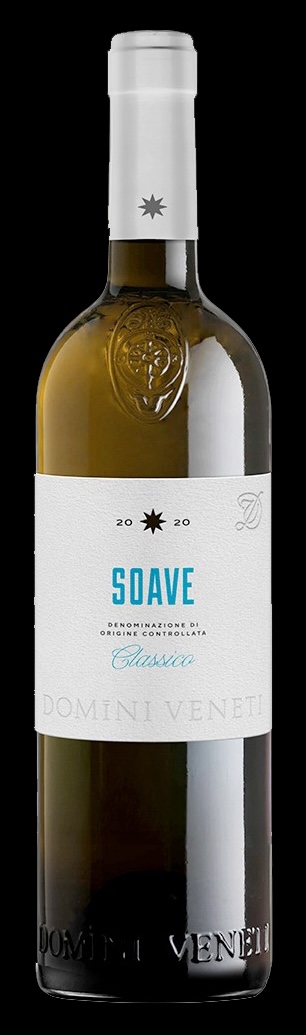
Soave Classico
Soave Classico DOC, 2025, 12.5%
This example of Soave Classico shows excellent typicity, being a blend of 85% Garganega, 10% Trebbiano di Soave and 5% Chardonnay. The grapes are from 20-30-year-old vines grown on pergolas in the Soave Classico zone, mostly on volcanic soils. Harvest is at the end of September, with destemming, soft pressing and then fermentation and maturation in stainless steel. There are only 15,000 bottles of this Equalitas-certified wine, bottled under a Nomacorc.
A typical light yellow, the aromatics are particularly striking, with white blossom, peach and almonds. The palate suggests fresh pineapple and citrus, and finishes with precision and that essential almond farewell. The texture is crisp and refreshing with a little roundness, perhaps from the dash of Chardonnay.
This textbook modern Soave is a real pleaser, for immediate drinking over the next year or so. A patio wine that’s also good with food? Tick. Try Asparagus Risotto, Seafood, or just a simple pasta with pesto.
Terrific value. Majestic, £10.50
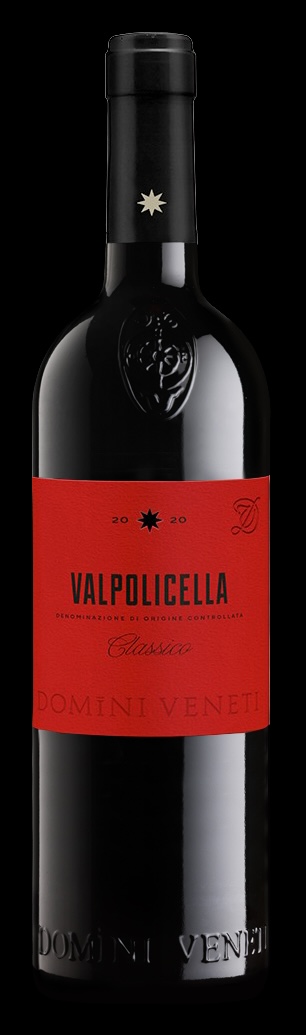
Valpolicella Classico
Valpolicella Classico DOC, 2025, 13%
This is a good example of Valpolicella, which has just been given a facelift with a new smart red label. It’s sometimes referred to as Novello to distinguish it from the other Valpolicella styles, as it’s made with fresh, rather than dried grapes. But just because it’s a simpler wine doesn’t mean it can’t be satisfying. This one is from hand-harvested pergola-trained grapes 15-25 years old in the Classico Zone. After destemming, fermentation and maturation is in stainless steel.
Sadly, Valpolicella can be inconsistent. One reason is that the dried-grape wines (Amarone, Recioto, and by extension, Ripasso) are selections of the best grapes from the same Valpolicella vineyards. As they command more money, too large a selection risks leaving only mediocre grapes in poorer years. Rest assured that this hasn’t happened here. Valpolicella is always a light red wine. There’s just enough soft tannin for texture but its pleasure lies in that unmistakable primary cherry fruit and fresh acidity, and there’s plenty of both to enjoy here. Drink this year, but it should last 2-3 years.
And versatile too. Chilled for a hot day on the patio? Tick. A glass to unwind with? Tick. Pizza and pasta? Or how about a BLT? Double tick. A good Valpolicella always bring a smile, so try this one.
Call Me Wine, £11.00
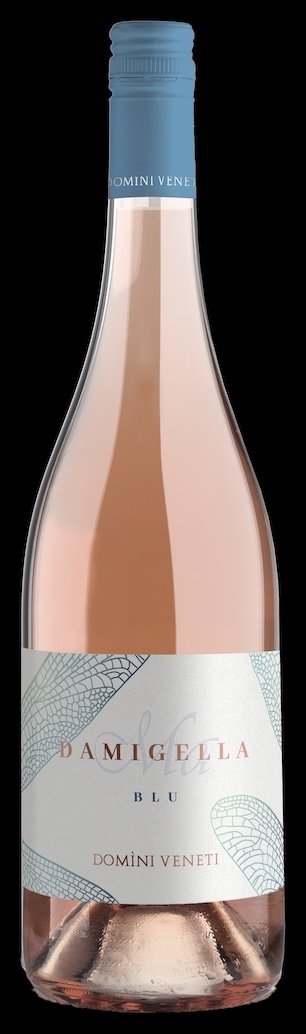
Ma Damigella Blu Rosé
Ma Damigella Blu, IGT Rosato Veneto, 2025, 12.5%
Valpolicella is a red wine appellation and so has no Rosé category.3 Hence, this wine is classified as IGT Rosato Veneto, but it’s still made with Valpolicella grapes, namely Corvina, Corvinone and Rondinella. The name Damigella is after a Blue Damsel fly, which can be seen flitting over clean water in Veneto summers, and to me that suggests pureness, lightness and agility, which is therefore rather apt. The Valpolicella grape varieties are picked by hand in September, soft pressed, and the wine is bled off the skins after a couple of hours. That ensures the colour is a fashionable pink, lying somewhere close to that of Provençal Rosé. As it comes in a clear glass bottle, keep it in the dark to avoid lightstrike.
Corvina brings some light, bright aromatics and an attractive hint of sage and rose petals. The palate has that fresh lightness backed up by a suitably slippery texture that’s excellent refreshment. That Patio will come in useful again, as a screwcap suits impromptu events and sunny days. This is a wine best to drink now, while zippy and freshest before the next vintage release. A brilliant salad wine too, try Insalata Caprese. Salmon fillets are good too.
As for UK availability, this new wine was launched at VinItaly in Italy in April 2024, priced at around €9. It’s not yet in the UK (perhaps it’s too similar to a Bardolino Chiaretto?) but it’s very much on trend – Importers take note! If it gets to the UK, I’ll let you know.
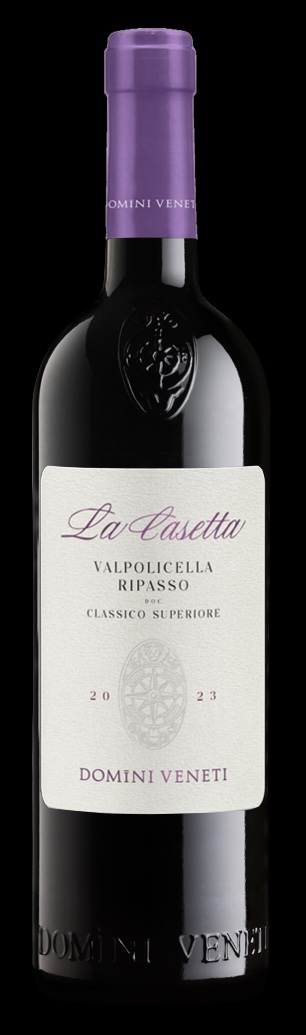
La Casetta Valpolicella Ripasso Classico Superiore
Valpolicella Ripasso Classico Superiore DOC, La Casetta, 2020, 14%
Over many wine tastings, this was usually my go-to bottle to demonstrate the Valpolicella Ripasso style. This wine is a real crowd-pleaser and deservedly a big seller in the UK because Domìni Veneti have honed their recipe over many years. This example was from 2020, so it had the benefit of a little more bottle age, as the current release is 2023.
A Casetta is the name for the box that collects those fresh Valpolicella grape bunches at harvest, destined to be air-dried to make Amarone and Recioto. That air-drying time is critical, as the longer it takes, the more water is lost and the more the sugars and complex compound flavours become concentrated, but you also need to avoid rot tainting the grapes during the process. Drying times differ by producer, but the rule is that the grapes can’t be vinified until after December 1st following the harvest. In reality, January and February are more usual.
The Domìni Veneti drying time depends on the type of wine being made. So it’s 90 days air-drying for the dry Amarone and a longer 120 days for the sweet Recioto, which are then fermented accordingly. This Ripasso uses the spent grape pomace from the Recioto fermentation. This is added (repassed) to the newly finished Valpolicella Novello wine in February, following the harvest. That technique induces a second fermentation for 15 days, which is kept at a low temperature (similar to that of a white wine, 15 °C). This adds alcohol, glycerine, and complexity, but without extracting harsh or bitter tannins. This young wine is aged in oak barrels for 18 months, with another six months after bottling under a FOR51 Cork.
Tasting
An impenetrable purple colour, a powerful-looking and big-bodied wine is leggy in the glass, mostly glycerine. Aromas are of dark cherries and blueberries. The palate is smooth and sensual, with those aromas reprised and with other nuances of dried fruits such as raisin and prune. There are no obvious woody notes, but a touches of cocoa and clove add interest. It’s still dry wine, but there is a little residual sugar left. This balances the acidity very well but doesn’t interfere with the long, slow finish. A couple of extra years of aging have brought something dark and brooding underneath the fruit. This is a super interpretation of the Ripasso style.
I like the drinkability – some Ripasso examples are more like mini-Amarone and too powerful for food. This one gets the balance right, so pair with food or enjoy solo. Drinking perfectly now and for the next ten years. As for food, Mushrooms (Porcini, Truffles), Ragù and stews with rice or pasta. Or save a glass for a good quality 70% dark Chocolate – a slab will do!
Majestic, £18.50
And Finally
I’ll leave the last word to Alessia Ceschi, Vice-President of the Cantina:
“Ours is a cooperative deeply rooted in tradition, yet determined to look to the future with a spirit of innovation and inclusion. The winery’s strength has always lain in its people: growers, employees and families who every day help preserve and enhance our land, creating wines that are deeply representative of the territory and able to stand out as expressions of excellence”.
Location
Cantina Valpolicella Negrar
Via Ca’ Salgari, 2
37024 Negrar di Valpolicella
Verona
Veneto
Italy
What3words location
Notes
- The only wine book I would ever want to write is about wine cooperatives. Most wine-producing countries have them (the USA and Australia are notable exceptions). Anyone who still misjudges cooperatives is making a grave mistake. Instead, their fascinating stories deserve to be told.
- It has certainly helped my appreciation, for example, when judging at the annual Amarone Ante prima event held in Verona.
- There are plenty of examples of Amarone elsewhere on these pages.