
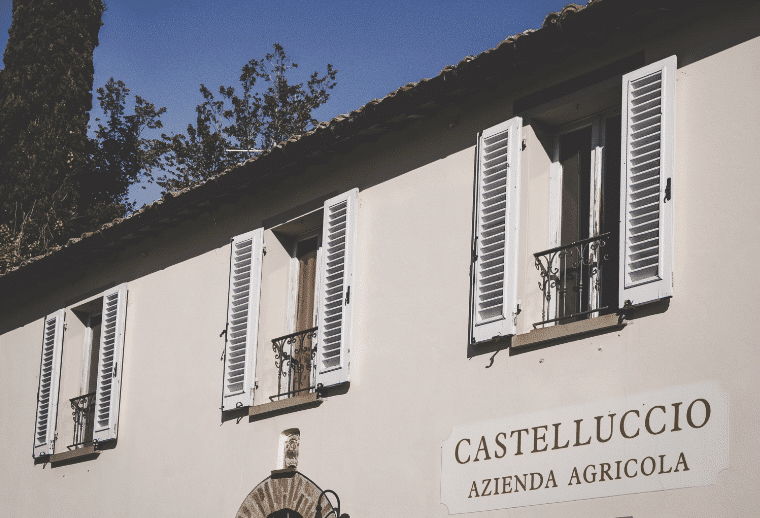
Ronchi di Castelluccio in Romagna
Ronchi di Castelluccio is a boutique winery at Modigliana, on the hillsides of Romagna in Italy. When the opportunity to try their flagship wines arose, no further encouragement was necessary.
This wasn’t just because of high-quality or because the wines of Romagna deserve better recognition abroad. In fact, it was a way to revisit this place through a wine glass, having previously spent a couple of weeks in this area on holiday.
First encounters
On that trip, we travelled entirely by train from the UK to visit the cultural delights of Romagna, such as Ravenna, Faenza, and Forlí. In particular, staying in Brisighella, one of Italy’s most beautiful villages, was particularly memorable. Moreover, it was at the impressive Ristorante La Grotta in Brisighella, just 10 km from Modigliana, that we first enjoyed a bottle of Ronchi di Castelluccio Sauvignon Blanc. That was all the evidence required to suggest that their top wines would be something special.
Hence, this article features four of their top wines: two white Sauvignon Blancs and two red Sangioveses. All four are single-vineyard “cru” wines. Two of these have been reestablished, profiling the first wines ever made here, while the other two are newer releases.
Before we get to them, it’s time to get a little more familiar with Romagna in general and Ronchi di Castelluccio in particular.
Romagna – a brief orientation
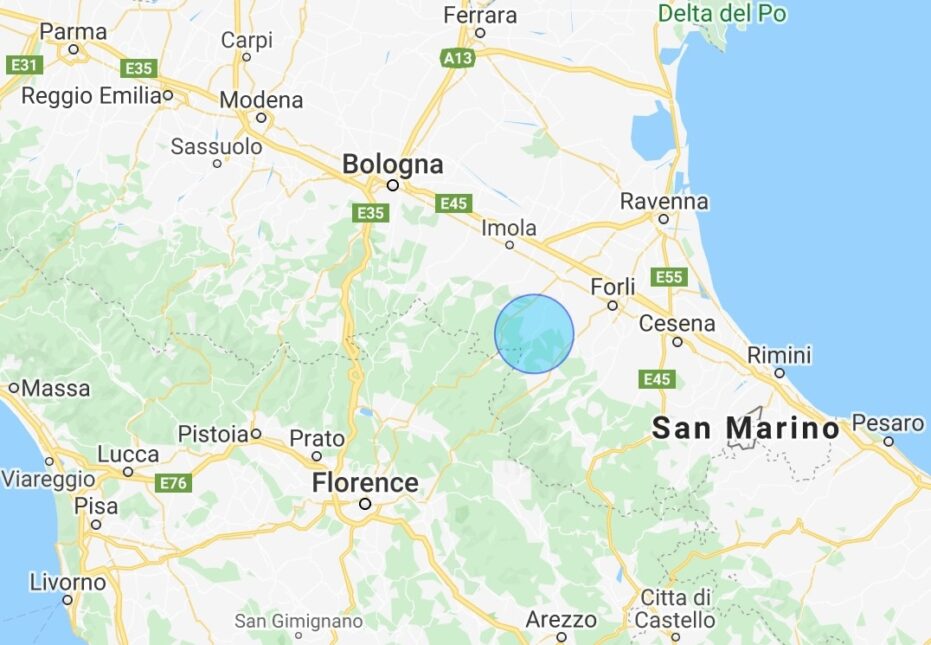
Modigliana location map
The main towns and cities in Emilia-Romagna are linked by the arrow-straight Roman road known as the Via Emilia. Each is located at what would have been a day’s march for a Roman Legion, and so they are all regularly spaced out and easily reached by rail and road. Travelling along it in a southeasterly direction, we leave Reggio Emilia and then Bologna behind.
On reaching the towns of Faenza and Forlí, head south. The low hills soon start to rise towards the high spine of the Apennines, with winter skiing and the border with Tuscany.
Now the vineyards of Romagna appear on the hillsides. They are in complete contrast to Emilia’s land of Lambrusco. In fact, their terroir means that Romagna’s wines are far closer in style to the wines of Central Italy.
Terroir
As is so often the case, the best wines come from hillsides, which offer the greatest potential for high-quality winegrowing. There are thinner (and poorer) soils comprising marine sediments (70% sandstone and 30% marl). Steep slopes are hard to work, yet offer better drainage and a variety of aspects and altitudes.
This results in microclimates suitable for many grape varieties, moderated by proximity to the Adriatic, just 30 km away. Summer thunderstorms are common, while humidity is lessened by altitude and winds.
Consequently, there is a mix of traditional native varieties (such as Sangiovese, Albana, Cagnina, Pagadebit and Trebbiano Romagnolo) while “international varieties” include Merlot, Cabernet Sauvignon, Chardonnay and Sauvignon Blanc. There are plenty of others, too. It has also resulted in Romagna having many appellations, whether DOCG, DOC or IGT.1
Ronchi di Castelluccio
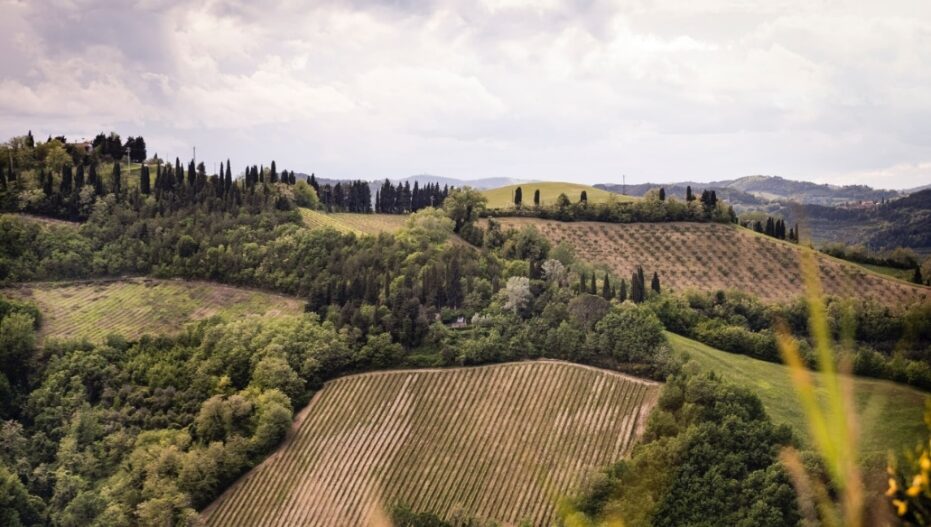
Ronchi di Castellucio vineyards
The Ronchi di Castelluccio winery was founded in 1974, in the Colli di Faenza at Modigliana. It was one of the first to pioneer high-quality wines in Romagna, at a time when most of Italy prioritised quantity over quality.
Later, it was sold by the founders, and then it endured a period of decline. The current owners (the Brothers Aldo and Paolo Rametta) bought it in 2000, and the restoration of the vineyards and the winery commenced. Their background was in renewable energy, and since 2016, they had owned the organic 40,000-bottle Poggio della Dogana estate, near Brisighella.
In addition, a 390-hectare organic cattle farm was added to the estate’s assets in 2023, and renewable energy generation is in development.
There are some 65,000 bottles made each vintage, comprising nine wines. 90% is sold in the Italian Ho.Re.Ca sector, with only 10% exported.
The Vineyards – Sauvignon Blanc and Sangiovese
The Ronchi vineyards are relatively high, at 300 – 400 metres, and mostly face north-northeast, so offering cooler conditions. These were literally carved out of the surrounding woodland that preserves biodiversity. Indeed, there is one hectare of vineyard for every seven hectares of trees. Broom, rowan, jujube, cherry, pomegranate and olive trees also thrive, and neither should we overlook the herd of grazing Alpacas!
Apart from a tiny patch of Cabernet Sauvignon, the vineyards have always been dedicated to low-yielding clones of Sauvignon Blanc and Sangiovese. These were chosen based on scientific research. Sauvignon Blanc was an unusual choice fifty years ago. However, this has proved fortunate, because back then the vineyard sites were too cool for the usual local candidates such as Albana and Trebbiano Romagnola.
With hindsight, all these factors have helped the winery withstand climate change while realising its quality potential. These vineyards are now full of old vines. Ronchi del Re was planted with Sauvignon Blanc in 1974 and so is over 50 years old, while others are 35-40 years old. They have been carefully restored, for example, by reverting to their original training systems.
There are also younger vineyards, which produce the entry-level wines, but even they are currently single-vineyard sites.
The Wines
Here are the four wines, two white Sauvignon Blancs and two red Sangioveses, all are single-vineyard wines, bottled under FOR 51 Corks.
Sottovento, Sauvignon Blanc, Rubicone IGP, 2022. 13.5%
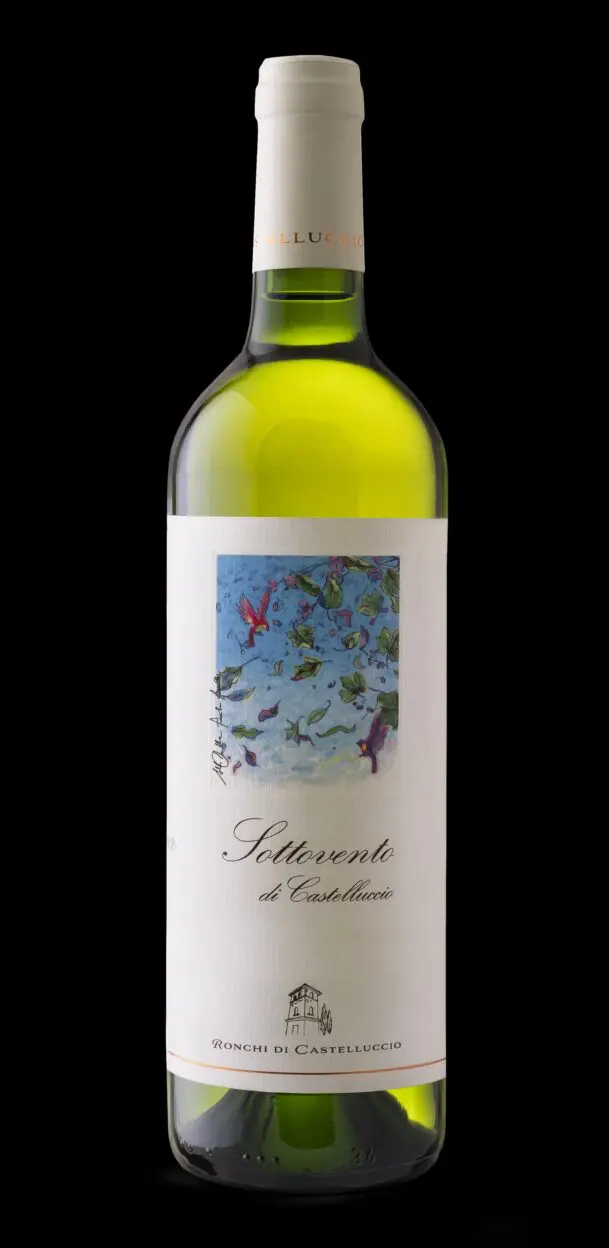
Ronchi di Castelluccio Sottovento
Technical
Vineyard planted in 1989 at 390 metres, unusually facing west-southwest, so warmer. This was launched in 2020. 100% Sauvignon Blanc, using the Rubicone IGP appellation. Hand-harvest in the second week of September, spontaneous fermentation in stainless steel. Then aged for twelve months in used barriques, followed by eighteen months in the bottle.
Tasting
Tinted a light gold. Initial impressions were that this wine was sufficiently different in aroma and flavour profile to wonder if it is blended with another variety, such as Trebbiano. It’s in a different wine style to the usual Sauvignon Blanc paradigm, with a softer, broader palate offering candied apple and pear aromas and flavours and just the right amount of alcohol.
There’s no assertive pungency, green herbal character or forthright acidity so typical of Sauvie from other climes. There is an attractive, long, dry Italianate finish featuring salted almonds. This is a satisfying and hugely enjoyable wine that shows precision, acidity and excellent balance. Just don’t approach this wine with the usual Sauvignon Blanc expectations.
Food
Antipasti is an ideal match, especially with mortadella, prosciutto and salame rosa. Or try Squacquerone DOP cheese, which is a runny fresh cow’s milk cheese from Romagna. For a main course, Frutta di Mare pasta is a surefire hit.
Ronco del Re, Sauvignon Blanc, Colli di Faenza DOC, 2022. 13%
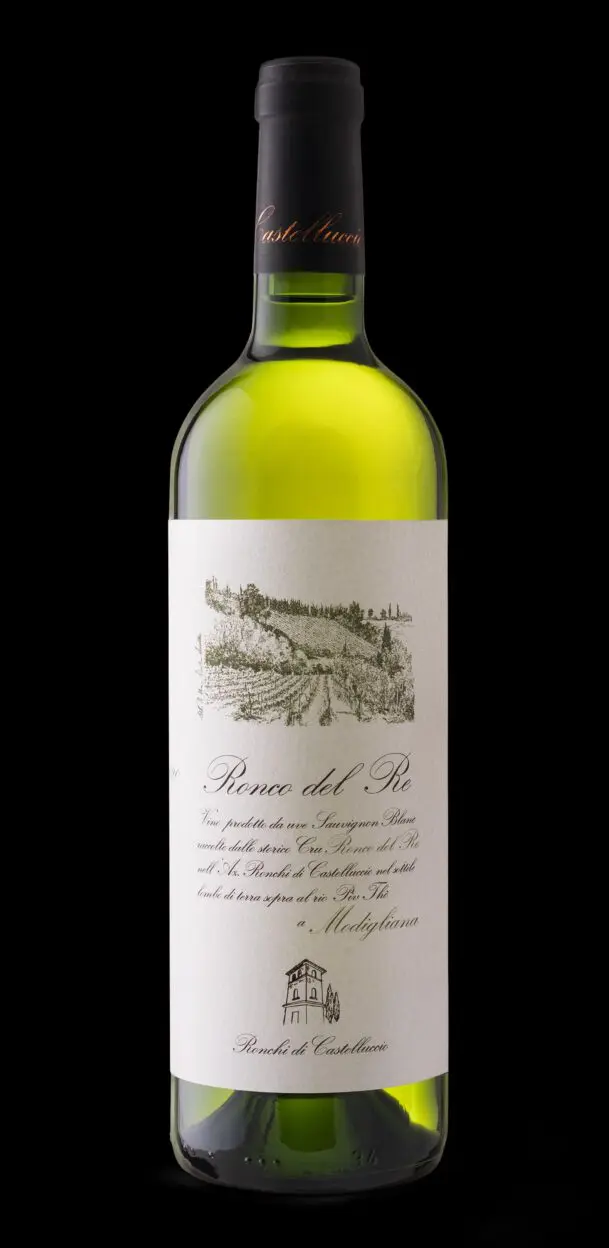
Ronco del Re
Technical
The flagship wine of the estate, the first vineyard planted in 1974, at 370 metres, facing east-northeast, with 100% Sauvignon Blanc. First vintage 1981, restored in 2019. Hand-harvest in the last week of September. Spontaneous fermentation in small wood barriques. The malolactic fermentation is not deliberately sought but may naturally occur in some barrels in some years. Ageing is then nine months in new French oak barriques (low toast Allier and Vosges, first and second pass). After that, a further two years in the bottle. Just 833 bottles made.
Tasting
This is quite rightly the estate flagship, and in one word, it’s stunning now and will age for years! It’s made in a rich and supremely engaging barrel-fermented style, where the amount of wood marries extremely well with the aromas, bringing slight oxidative notes, a savoury palate, a touch of honey, nuts and clove and then a long fading finish with a little salty edge.
Some maintain that Sauvignon Blanc and barrel fermentation are particularly ill-matched, and it certainly takes great skill to get this marriage right. Well, this is up there with the world’s very best examples that are available at real-world prices (for example, in New Zealand, Cloudy Bay’s Te Koko, French Sancerre from Alphonse Mellot and Cotat, and the South African Lismore and Reyneke).
Food
The style of this wine is perfect with rich cuisines, big flavours or more difficult partners. English asparagus with Hollandaise sauce, artichoke hearts, and Thai dishes with tamarind.
Buco del Prete, Sangiovese Modigliana, Romagna DOC, 2022. 13.5%
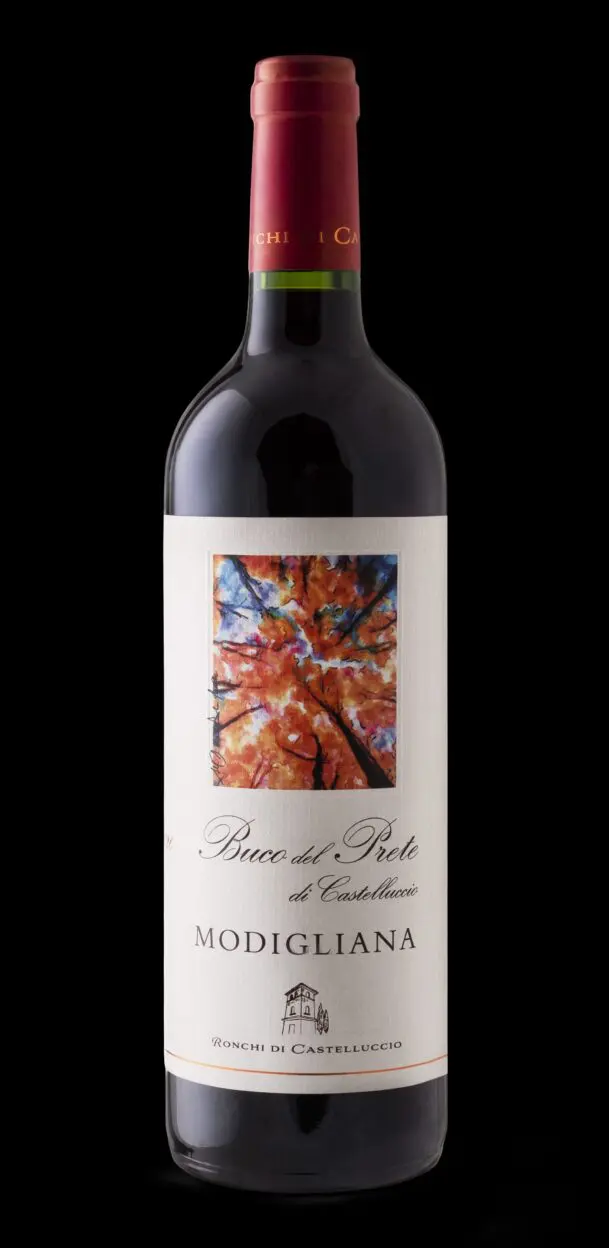
Buco del Prete
Technical
100% Sangiovese Grosso (Romagna clones). The Buco del Prete vineyard was planted in 1989 at 300 metres (the lowest), facing east-northeast and surrounded by woodland. Hand harvest in the last week of September and the first week of October. Spontaneous fermentation in stainless steel with 25 days of maceration on the skins. Ageing in large 3,000-litre French oak barrels, low toast. Then, a further eighteen months in the bottle. Modigliana is a subzone of Romagna DOC.
Tasting
This is a hugely successful wine, where the large oak barrels allow the fruit to sing, while the tannin management is exceptional. Drinking well now, and it’ll probably age gracefully and add complexity over the next decade. There’s a deep ruby colour, then the aromatics feature cherry fruit and scents from the tea-caddy. It’s bold on the palate yet elegantly balanced with the right amount of alcohol and acidity, with some earthiness underpinning the cherry fruit, while hints of cinnamon, clove and nutmeg enhance a long dry finish. Open one bottle now, but keep another bottle back for ageing.
Food
The tannins here make food essential, but they also offer great matching potential for savoury dishes with meat and mushrooms. Beef or Mushroom Wellington is a fine match – the acidity cuts the pastry casing while the tannins then get to work on the contents.
Ronco della Simia, Sangiovese Modigliana, Romagna DOC, 2020. 13.5%
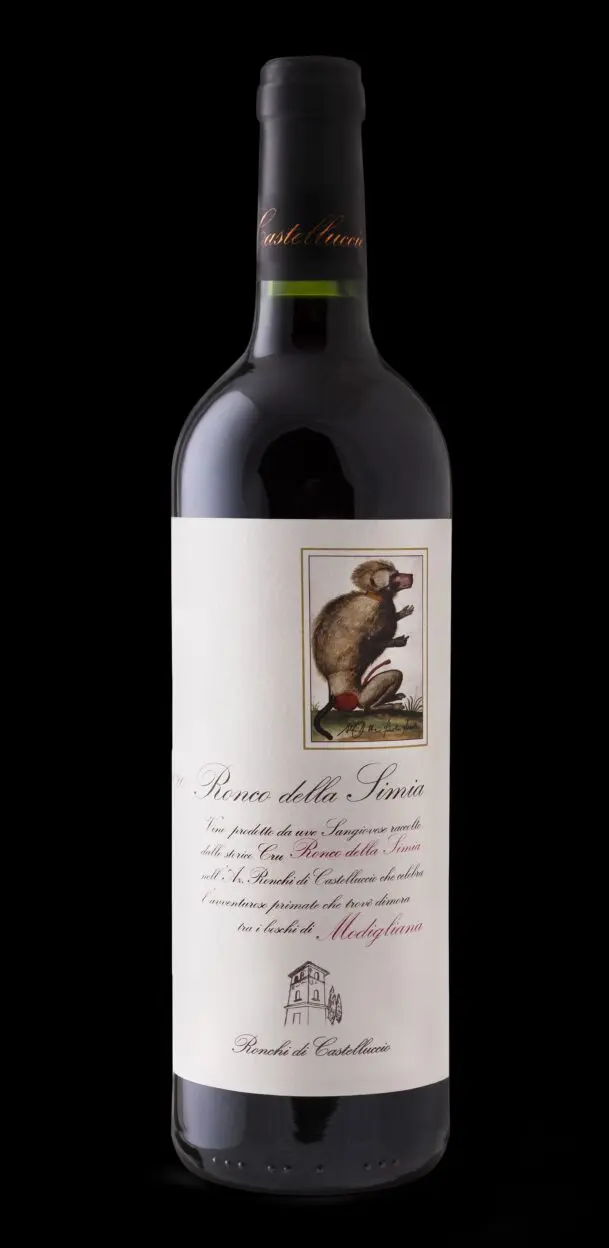
Ronco della Simia
Technical
Vineyard planted in 1975, facing east at 440 metres. One of the original wines of the estate, restored in 2019, using 100% Romagna Sangiovese clones that have thick skins and small berries. Handpicked during the last week of September. Spontaneous fermentation in a combination of stainless steel and small oak vats, with 30 days of maceration on the skins. Ageing for ten months in new French oak (Allier and Vosges), a combination of low toast barrique and tonneaux, first and second pass. Followed by another two years in the bottle. Volume: 2,500 750 ml bottles, and 150 magnums. Again, Modigliana is a subzone of Romagna DOC.
Tasting
This wine was decanted for two hours before serving – and that wasn’t enough! It’s a wine designed, without compromise, for long ageing and development, and even at five years old, it is incredibly austere. Just as you would not open and drink a top Bordeaux, Barolo or Montefalco Sagrantino at such a young age, the same rule applies here. The colour is incredibly inky, implying great concentration. There’s some bergamot on the nose and palate, but as yet the fruit aromas and flavours cannot escape from tannic gravity imparted by both grape and new oak barrels.
Left open overnight, it then proved slightly more approachable. There were hints of cherry fruit, smoke and spices peeking out from a wall of tannins. Only time can tame this. I’m confident that this wine will transform into elegance and complexity in, say, another five years, but I have not encountered older examples that prove this point. This is a wine for trusting in long-term cellaring, to at least 2030, preferably beyond.
Food
Big flavours and textures when the time comes, such as roast rare beef, game, truffles, and hearty stews.
And Finally
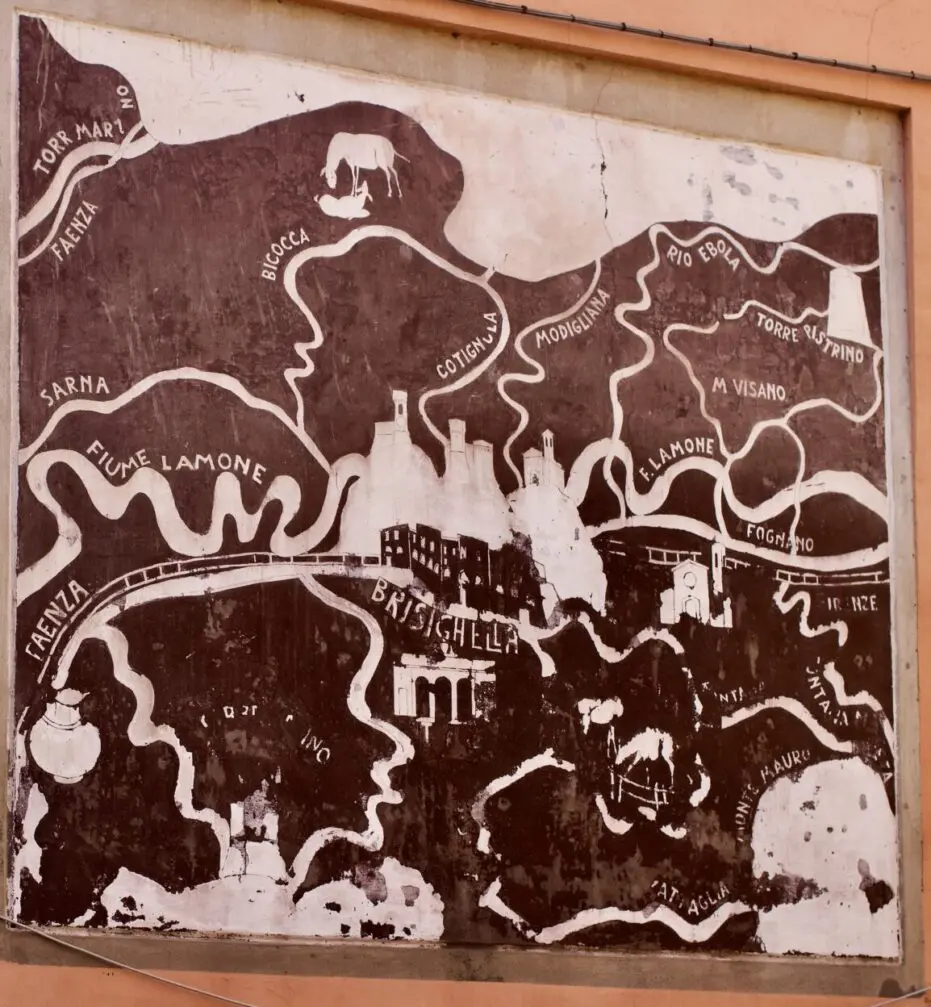
Local Map on a Brisighella Wall showing Modigliana
These wines are different from the familiar varietal norm, offering individuality and an authentic sense of place.
The Sauvignon Blancs have a broader and fuller expression than the examples from more northerly regions such as Friuli and Alto Adige, and show different flavour profiles to more familiar sources such as the Loire or Marlborough.
Sangiovese is at the northern end of its range, and comes unblended. So it’s distinct from, say, warmer Tuscan examples, which are frequently blended. These Romagna examples also show typicity with deeper colour and considerably more tannin.
Now representation is being sought for UK distribution, and on this evidence, it shouldn’t be long coming. As a guide, Italian restaurant prices are about €20 for the newer wines (Sottovento and Buco del Prete), and €60 for the original cru wines (Ronchi del Re and Ronco della Simia). The entry-level wines are about €10.
The next time I get to Romagna, I’ll certainly want to visit Ronchi di Castelluccio!
My thanks to Aldo and Paolo Rametta, not only for their wines and hospitality, but also for reminding me of treasured holiday memories.
Location
Via Tramonto 15
Modigliana
Province of Forlí-Cesena (FC)
Emilia-Romagna
Italy
What3Words Location
Notes
- While the various Romagna appellations reflect differing terroirs and traditions, things can appear complicated. For this article, just three are relevant: Romagna DOC, Colli di Faenza DOC, and Rubicone IGP. Since 2011, Romagna DOC simplified things a little by combining five previous DOCs. However, with 3,500 hectares, there are eleven subzones (for example, Modigliana and Brisighella), and each one has its own rules! In contrast, tiny Colli di Faenza, created in 2021, only has three wineries, of which Ronchi is one! Meanwhile, Rubicone IGP covers over 4,000 hectares, permitting a huge range of wines, grape varieties and styles.