
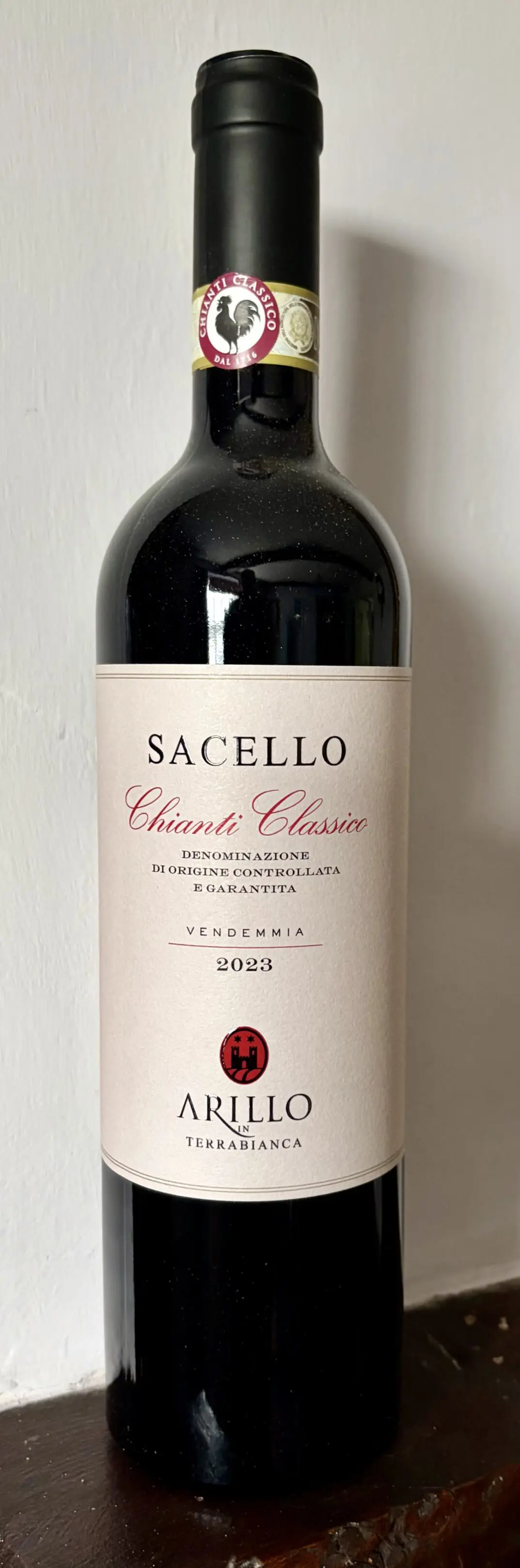
Sacello – Chianti Classico from Arillo in Terrabianca
Arillo in Terrabianca is located in the Radda commune of Chianti Classico in Tuscany. This article is devoted to just one of their wines, namely Sacello, a Chianti Classico DOCG made only with Sangiovese, grown at Tenuta Terrabianca.
The estate was originally a medieval farm. Winegrowing began in the 1950s. It was acquired in 2019 by Adriana and Urs Burkard, with their sons Gregor and Ricardo. The family now owns three Tuscan estates, each with a different terroir, with a total of about 60 hectares of vines. These are Tenuta Terrabianca in Chianti Classico, Il Tesoro in coastal Maremma and Colle Brezza in Val d’Orcia.
Headquartered at Terrabianca, their vision is of a single contemporary eco-sustainable wine business. As part of this they achieved certified organic status at Terrabianca from the 2023 vintage, certified by BioAgricert, and furthermore are also certified sustainable by Equalitas.
The winery at Terrabianca is currently undergoing renewal and due to open in 2027. It’s designed by Swiss Architect Mario Botta.1 In addition, their ambitious plans include providing hospitality and wine tourism facilities, for example a garden, a bistro and fine-dining restaurant. There will be an art gallery and musical events too.
Chianti Classico DOCG and Radda
The Radda area is in east-central Chianti Classico. You’ll find Tenuta Terrabianca in the southernmost part of it, about 10km south of the town of Radda, on the SP102, at San Fedele di Paterno.
Radda is one of the eight current designated UGAs in Chianti Classico, but this still only applies to the top level Gran Selezione wines. An Annata or Riserva wine cannot therefore state that it’s Radda UGA under the current rules.2
However, Terrabianca, as well as being a member of the Consorzio Chianti Classico, is part of the local marketing association of 25 wineries in Radda commune known as Vignaioli di Radda. You’ll see their logo on the back label of Sacello.

Arillo in Terrabianca
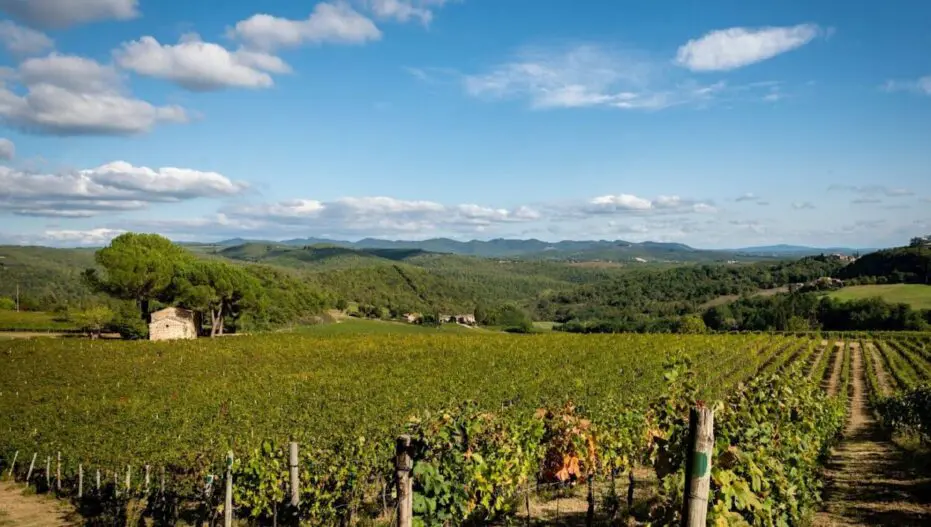
Arillo in Terrabianca
Tenuta Terrabianca has a total of 135 hectares. 12.5 hectares are vineyards, mainly planted to Sangiovese, and planted between 1970 and 2023. The estate faces south in a natural valley at 350-470 metres, lying below the hill of Vagliagli at a relatively high altitude.
The vines are surrounded by 121 hectares of old oak forest which offers protection and biodiversity. Estate management of this resource is FSC-certified. The pale coloured soils comprise albarese limestone, with clays and macigno chiantigiano sands.
The three Terrabianco Chianti Classico wines are all 100% Sangiovese, and each is sourced from different vineyards. Sacello comes from the Latin word sacellum, named after the 12th century chapel in the vineyards. It’s the Annata wine from six hectares of Sangiovese vines grown near to the winery at the Ceppate and Sotto Casa vineyards. The vines are 15 years old, guyot-trained and are at 410 metres.
The other two wines are single-vineyard expressions, namely Poggio Croce Riserva DOCG and Vigna Terrabianca Gran Selezione DOCG.
Sacello, Chianti Classico DOC Rosso, Toscana, 2023. 13.5%
Technical
The 2023 vintage was a low yielding but high quality. Despite a rainy spring threatening fungal diseases, the ensuing summer that year was mild and regular. There were no extreme heat spikes, and no damaging hailstorms either! So the harvest benefited from long, slow ripening and the diurnal variation that comes with altitude.
The harvest itself was by hand in late September and early October. For Sacello, winemaker Vieri Vannoni vinified these grapes in stainless steel, with a brief maceration to extract colour and complexity.
The new wine was then matured for 6-8 months in unglazed concrete vats followed by another six months in bottle under a FOR51 cork. This wine therefore sees no wood. These days, 100% Sangiovese wines are have become common in the DOCG. They bring the opportunity to try Sangiovese in unadulterated form which also helps to express the local terroir.
Tasting
Sacello was decanted for 30 minutes as it’s a young wine, but on this occasion there was no real need as it’s already open and drinking well.
A surprisingly dark ruby colour in the glass, especially for a 100% Sangiovese. Perhaps the deeper colour is from the clones used? Delightful aromas of black cherry and violets, a hint of rose petals too.
Those scents are reprised on the palate, with something extra, maybe pomegranate. With no wood to get in the way, the soft tannins, bright clean fruit and mineral sensations meld with fresh acidity into a truly elegant wine that speaks of its origins in Radda. The alcohol is very well balanced, adding weight but avoiding plushness or opulence, and without naked power.
Indeed, the best wines from Radda wines are known for their elegance above all other characteristics. With bottle age, this wine might fill out a bit as it develops further. However, it’s hard to resist opening it now, even though I would expect a ten year lifespan.
Food
Tortelli di patate del Mugello is an authentic partner. Combine these potato-stuffed tortelli with Ragù, or alternatively serve them with butter and sage.
UK Stockist
Carringtons Wines, Manchester, £22.87. Because they also stock the Riserva (£28.07) and Gran Selezione (£50.95) it’s worth looking out for those as well.
And Finally
Sacello shows a distinct sense of place, and is a delight from beginning to end. It’s a beautifully grown and made organic Chianti Classico wine with a very classy label.
These days, some Chianti Classico annata wines are at the £30+ mark, so this wine is great value as well. Moreover, it leads you on to the Riserva and Gran Selezione wines. I look forward to finding out more about those!
Location
Arillo in Terrabianca Società Agricola s.r.l.
Località San Fedele a Paterno
53017 Radda in Chianti (SI)
Toscana
Italy
What3words location
Notes
1. Mario Botta’s CV includes the iconic Petra winery at Suvereto in the Maremma.
2. Chianti Classico DOCG rules get ever more complex and are subject to frequent revision and gradual implementations. Perhaps UGAs will be extended to designations other than Gran Selezione in the future.