
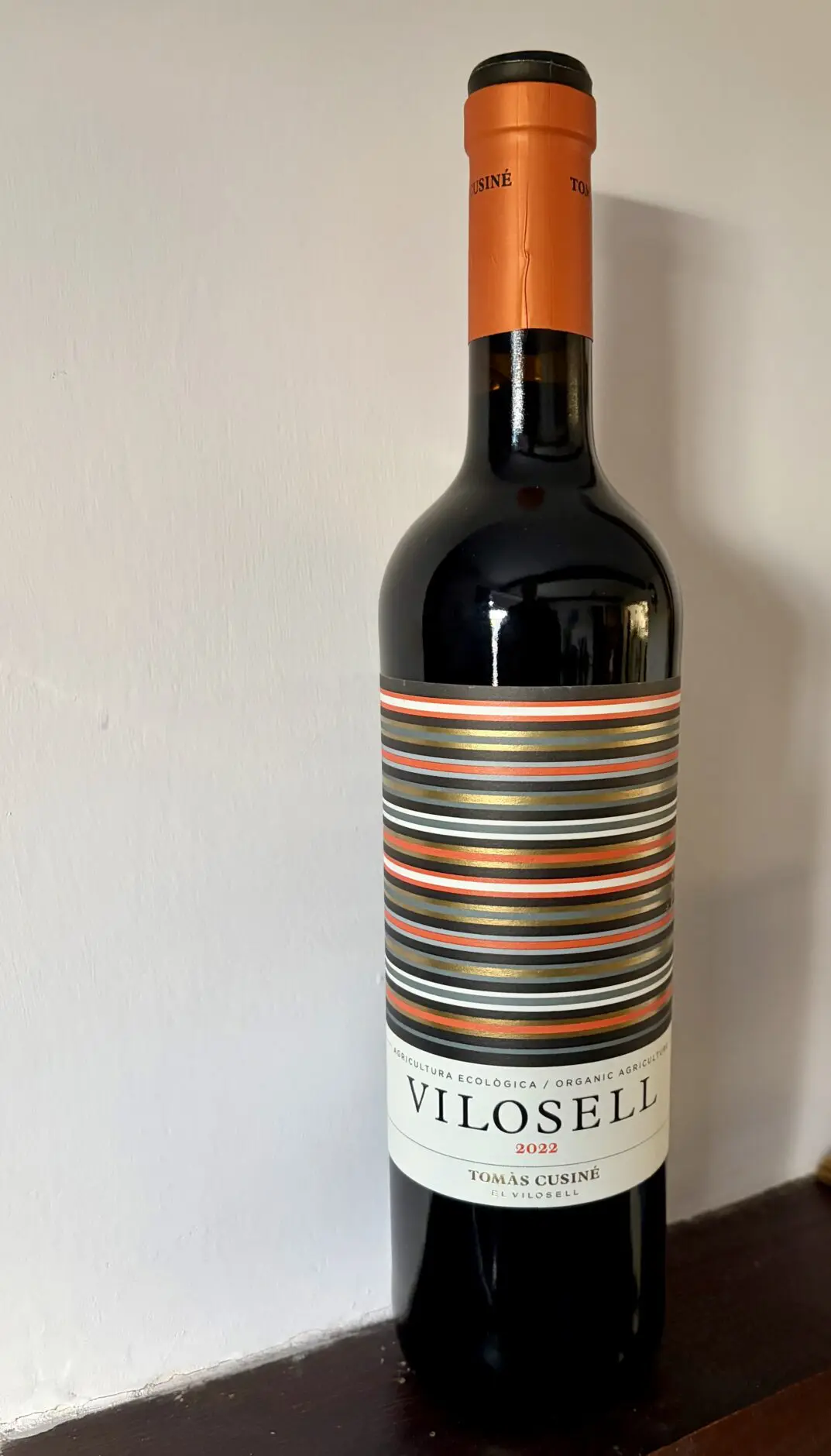
Vilosell – Tomàs Cuisiné, Twenty Years On
Twenty years ago, an encounter Spanish red wine called Vilosell inspired me to visit Catalonia, and I have been back many times since to visit its various wine regions. Meanwhile, Vilosell has been an annual companion ever since.
This all-new article is about the current release (2022). However, it is also compared with the 2004 vintage, which was the Wine Alchemy Wine of the Month in March 2006.
Vilosell is made by the Cantina Tomàs Cuisiné, in a small but ambitious winegrowing appellation known as the Costers del Segre DO 1.
Costers del Segre DO
Terroir
This land has made wine for millennia, but was almost destroyed by the Phylloxera epidemic in the late 19th Century. Recovery was slow and patchy. Some vineyards were abandoned, others converted to olive groves. Replanting was often based on the introduction of international varieties.
The DO was created in 1986, and this area now has an enviable reputation for high-quality wines employing the latest research and technologies.
The Costers del Segre is an arid semi-desert with a decidedly continental climate, as it is inland from the Mediterranean. The majority of vineyards are sited at less than 300 metres altitude on the banks of the river Segre, which rises in the Pyrenees near Andorra and flows south to join the river Ebro south of the city of Lleida (Lérida).
However, the Vilosell vineyards are much higher, in true mountain country, at 712 metres. This high altitude also brings dramatic temperature differences between night and day, even in the heat of summer.
Indeed, the climate here is severe, with blazing summers, freezing and foggy winters, and little rainfall (an annual average of only 380 mm). Any moderating influence rom the Mediterranean is, at best, marginal.
The soil composition is of varying amounts of gravel, with clay and silt lenses and bands of conglomerate and calcareous sandstones.
Subzones and grape varieties
The DO has 4,182 hectares of vineyards, but it’s a very fragmented vineyard area and hence was once divided into four subzones with just six member wineries. Now there are 36 wineries in seven subzones. These are Artesa de Segre, Les Garrigues, Raïmat, Valls del Riu Corb (the original four), plus Pallars, Segrià and Urgell.
Here we are concerned only with Les Garrigues, as this is where Vilosell is grown and also where the Cantina Tomàs Cuisiné is located. It forms the southern border with neighbouring appellations Priorat DOQ and Conca de Barberà DO.
As for the authorised grape varieties, there are currently 16 whites and 13 reds – a mix of native Spanish and internationals. Styles are red, white, rosé, plus sparkling Cava and sweet wines. The DO also has its own sustainability programme, and it was the first appellation in Spain to introduce one.
Tomàs Cuisiné
Tomás Cuisiné earned his winemaking reputation at the highly respected Castell del Remei estate in Costers del Segre, which his family had bought in the 1980’s. In 2003, Cuisiné created his own estate in the village of El Vilosell and began making two blended red wines – Vilosell and Geol.
Since then, the estate has gone from strength to strength. It has 30 hectares of vines and access to growers with a further 70 hectares. Hence, there are 17 different grape varieties and a wider portfolio of red, white and rosé wines. Cuisiné is also rescuing rare traditional grape varieties. Tomàs now has more than 40 vintages under his belt and was the President of the Costers del Segre DO for two terms, 2018 – 2025.
Vilosell
Back in March 2006, Vilosell 2004 was Wine Alchemy’s Wine of the Month. Here’s a précis of what I wrote about it then:
Vilosell, Tomàs Cusiné, Costers del Segre DO, Cataluyna, Spain. 2004. 13%
“Vilosell is a blend of 49% Tempranillo (known as Ull de Llebre in Catalan, meaning “Hare’s Eye”), 28.5% Cabernet Sauvignon, 12.5% Garnatxa Negra, and 10% Merlot. An appetising deep crimson in colour, this wine is complex and sumptuous, with good fresh acidity. There’s raspberry, blackcurrant, plum and spices cut through with an underlying earthy minerality. Although given 9 months in French oak, the oak doesn’t dominate; rather, it supports the rich fruit extremely well. There’s some black pepper on the finish. Well-balanced, smooth, softened tannins, very modern style and no alcoholic heat.
Superbly packaged with an ultra-smart label that immediately reminded me of the designer Paul Smith, this wine is a joy from beginning to end and deserves a second bottle! Just watch for sediment; this needs decanting or a very steady hand when pouring. Drinking beautifully now and probably over the next 3-4 years. Heartily recommended and a stunning bargain. Great with Tapas”.
And here’s the 2022 current release:
Vilosell, Tomàs Cusiné, Costers del Segre DO, Cataluyna, Spain. 2022. 14.5%
Now a blend of Ull de Llebre, Garnatxa Negra, and Syrah (exact ratio unknown). The grape harvest is by hand, with a sorting table at the winery. After pre-fermentation cold soak, the fermentation uses indigenous yeasts in a 10,000 litre wooden tank at 22-26 °C. Then given 9 months in French Oak barrels (first and second use), then a further 3 months after blending in a cement tank. Bottled under a DIAM 5 Cork. Minimal sulphur, Decanted, but no sediment – assumed that there is filtering.
Deep, impenetrable colour, almost blackish, leggy with alcohol. Nose shows complexity: blackcurrant and blueberry, earthy minerals, a hint of woodsmoke, but no more than that. Powerful wine in the glass, alcohol increased, but offers opulence rather than heat.
Excellent balance with high fresh acidity, the weight of dark fruit and a rounded tannic texture. Oak influence is subtle and supportive, with only a hint of vanilla and mocha. An elegant expression with a pronounced and attractive long balsamic finish and a smidge of white pepper. Drinking now and over the next 3-4 years.
Food – Tapas, yes, but also local specialities such as Cargols a la llauna (snails from the Lleida area) and Fricandó (Catalan beef stew with mushrooms). Moussaka will doubtless work very well too.
UK availability
As for the price, it was £8.50 in 2006. Now it’s £12.95 from The Wine Society. That price increase is less than inflation over the last 20 years, so Vilosell is even more of a bargain now 2.
And Finally
Over the past 20 years, you would expect changes and development, at the DO, at Cantina Cuisiné and with the wine itself.
As for Vilosell, the front label hasn’t changed, but the back label now includes Braille. The wine within has become a slightly different blend, and the vines are 20 years older, with Syrah replacing Cabernet Sauvignon and Merlot. This might be for climatic reasons, but it also improves the wine. Despite the altitude, the alcohol content has risen thanks to climate change, from 13% to 14.5%. That’s well managed here, but it does suggest the future challenges we all face.
Vilosell also now has organic certification from CCPAE (Consell Català de la Producció Agrària Ecològica).
Yet, what endures is most prized. Vilosell remains a remarkably high-quality wine offering stunning value. And consequently, what hasn’t changed one jot is my admiration for it.
Notes
- Thanks to the DO for the background information, especially about their seven subzones. No wonder their graphic now uses the format COS7ERS DEL SEGRE.
- Source: Bank of England inflation calculator.
Location
Cantina Tomàs Cuisiné
Plaça Sant Sebastià, 13
25457 El Vilosell
Les Garrigues, Lleida
Catalunya
Spain
What3words Location
Interested in more Spanish Reds? Then Try these.